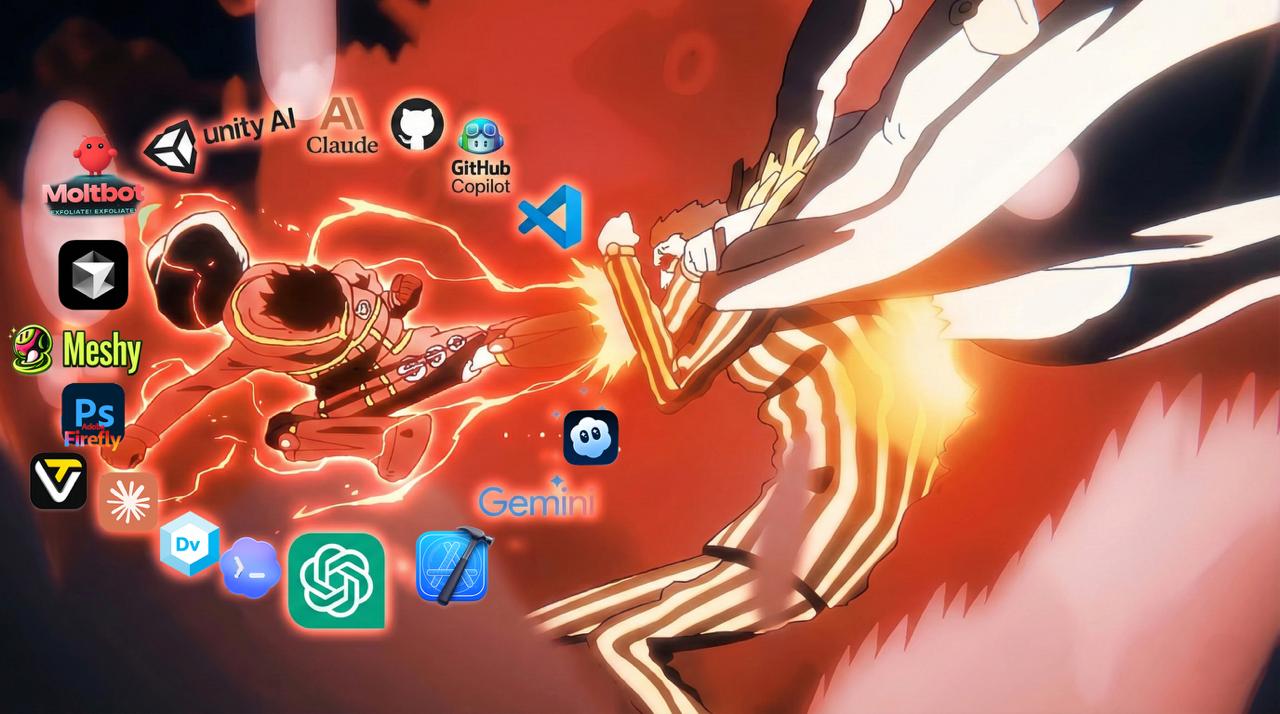
When Opus 4.6 dropped this morning, it made me reflect on something I've been wanting to try for the past two years. The results? They changed how I think about software engineering forever — like unlocking a new Gear.
⚓ The Challenge: A PHP Game Backend Under Storm
Here's the situation: I had a PHP backend handling user scores CRUD and authentication for a game. When concurrent users spiked, PHP performance became painfully bad. Instead of throwing money at server specs, I wanted to leverage Node.js's async architecture to make the server lighter and faster.
Back then (2 years ago), I tried creating a Custom GPT, feeding it all my PHP files. It didn't quite work out — the models weren't there yet. But fast forward to December 2025 with Opus 4.5, and everything changed.
⚔️ PHP → Node.js: One Afternoon's Voyage
With Claude Opus 4.5 alone, I converted the entire game backend from PHP to Node.js in a single afternoon:
- Matching the existing database's password encryption (seamless user transition)
- Preserving all business logic and CRUD operations
- Auth flow working identically to the original
- Async architecture ready for high concurrency
// The key prompt pattern:
"Convert this PHP backend to Node.js/Express.
 Keep all business logic identical.
 Match the password encryption method exactly
 (including salt handling) so existing DB records
 work seamlessly. Generate unit tests for all
API endpoints."🏴☠️ Laravel 8 → Laravel 12: The 20-Hour Sprint
Next challenge: upgrading a PHP 7.4 / Laravel 8 project all the way to PHP 8.4 / Laravel 12. Normally, you'd go step by step:
Estimated timeline? About 3 weeks. Same functionality, same business logic — just updating structure and syntax for each version jump.
📱 Java Android → Swift iOS: Zero Swift Knowledge
This one still blows my mind. I took an entire Java Native Android project, fed it for structure & code analysis, and asked it to generate an equivalent Swift iOS Native project:
- Complete Swift project with proper iOS architecture
- Backend API integration already wired up
- Full unit testing for API and auth features
- UI needed polish, but functionally complete
Here's the kicker: I don't know a single line of Swift. Yet I now have access to iOS's native power. Before AI, this kind of cross-platform leap was like trying to cross the Calm Belt without a coating! 🚢
🗺️ Why Conversion Projects Are Perfect for AI
Conversion projects provide both content and context in abundance — like having a perfect Eternal Pose:
Clear Source of Truth
"Don't know what logic to write? Go look at the original codebase."
Defined Target Tech
"What technology to use? Whatever I tell you to use."
Measurable Completeness
"How far to go? Until every function matches the original."
For models with large token limits and memory — like Opus — they can handle everything at once. Even if a single pass isn't enough, break it down: "Take feature X from the Java project and add it to the Swift project now."
🌊 The Future: One Pirate + AI = Unlimited Potential
Before AI (Old Era)
~18 people coordinating, context-switching overhead, weeks of delays
With AI (New World)
One engineer + best model + token budget = faster delivery, better security, zero overhead
When a product is usable, functional, and secure — that's all you need to go live. The era of the solo product owner is here.
From beginners to senior engineers — I hope everyone becomes a Product Owner in their own right. The tools are here. The leverage is real. What will YOU build?


 Voyage log